Lesen Sie die Indikationen auf dieser Seite und die Methodik; für Physiologie und ausführliche Texte öffnen Sie Forschung. Die Gerätezertifizierung ist unten in einem eigenen Abschnitt zusammengefasst.
Von der Zusammenfassung zum Detail: Überblick, Indikationskarten, dann Gerätezertifizierung.
Die Seite bündelt aggregierte Zahlen und Indikationskarten; für Physiologie und ausführliche Texte nutzen Sie die Forschung und für den klinischen Kontext nach Thema den Therapie-Hub. CE- und ISO-Zertifizierung der Geräte steht im Abschnitt weiter unten.
Die Plattform stützt sich auf wissenschaftliche Evidenz. Filipa und das Team pflegen und aktualisieren diese Evidenzbasis.
Evidence Overview
Biofeedback as a therapeutic modality has been the subject of clinical research since the 1960s. The evidence base now encompasses thousands of published studies. We focus on systematic reviews, meta-analyses, and high-quality randomized controlled trials.
38+
Randomized controlled trials (ADHD)
143
Studies reviewed (HRV)
16+
Conditions with evidence
2021-26
Primary focus period
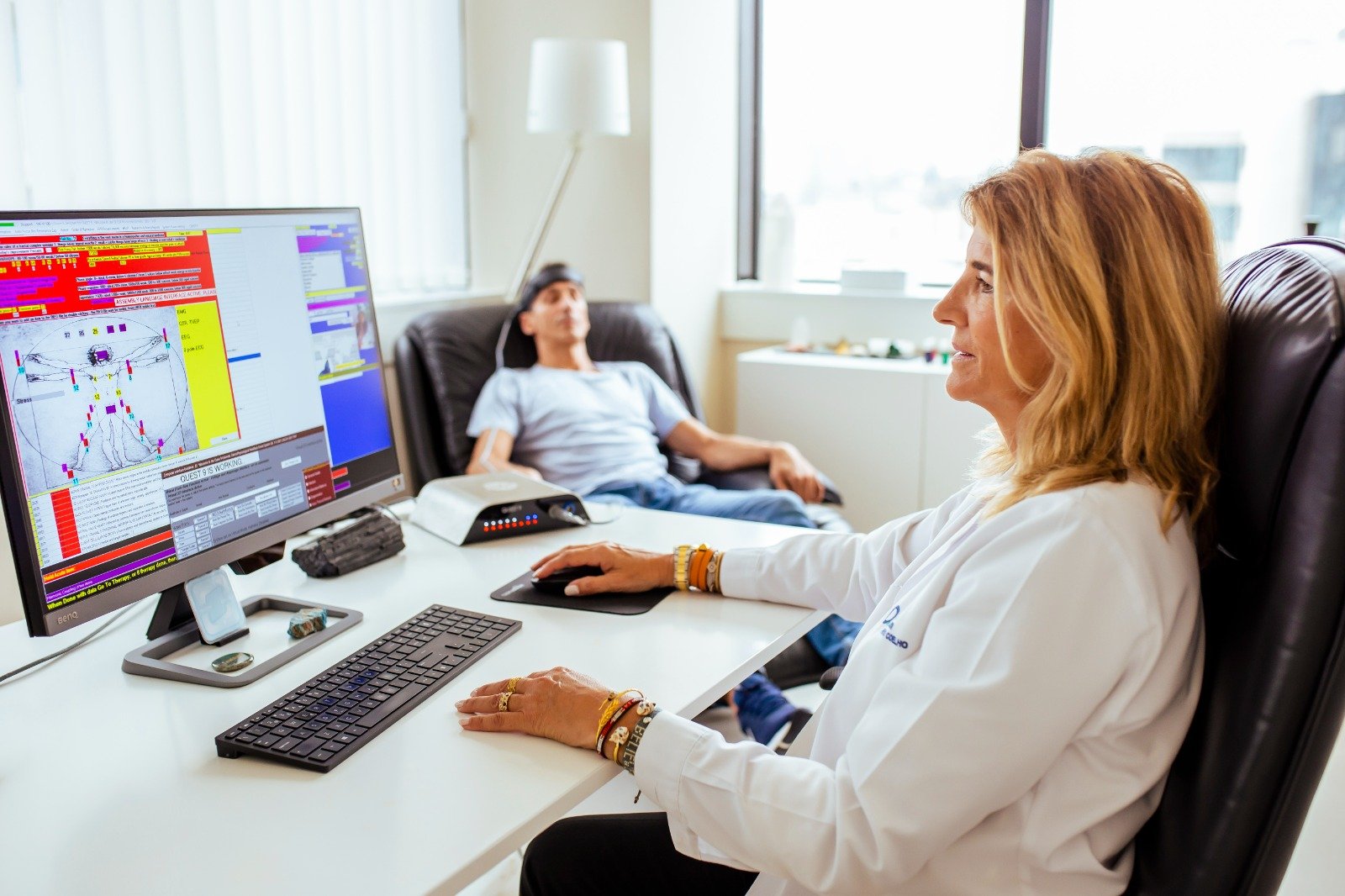
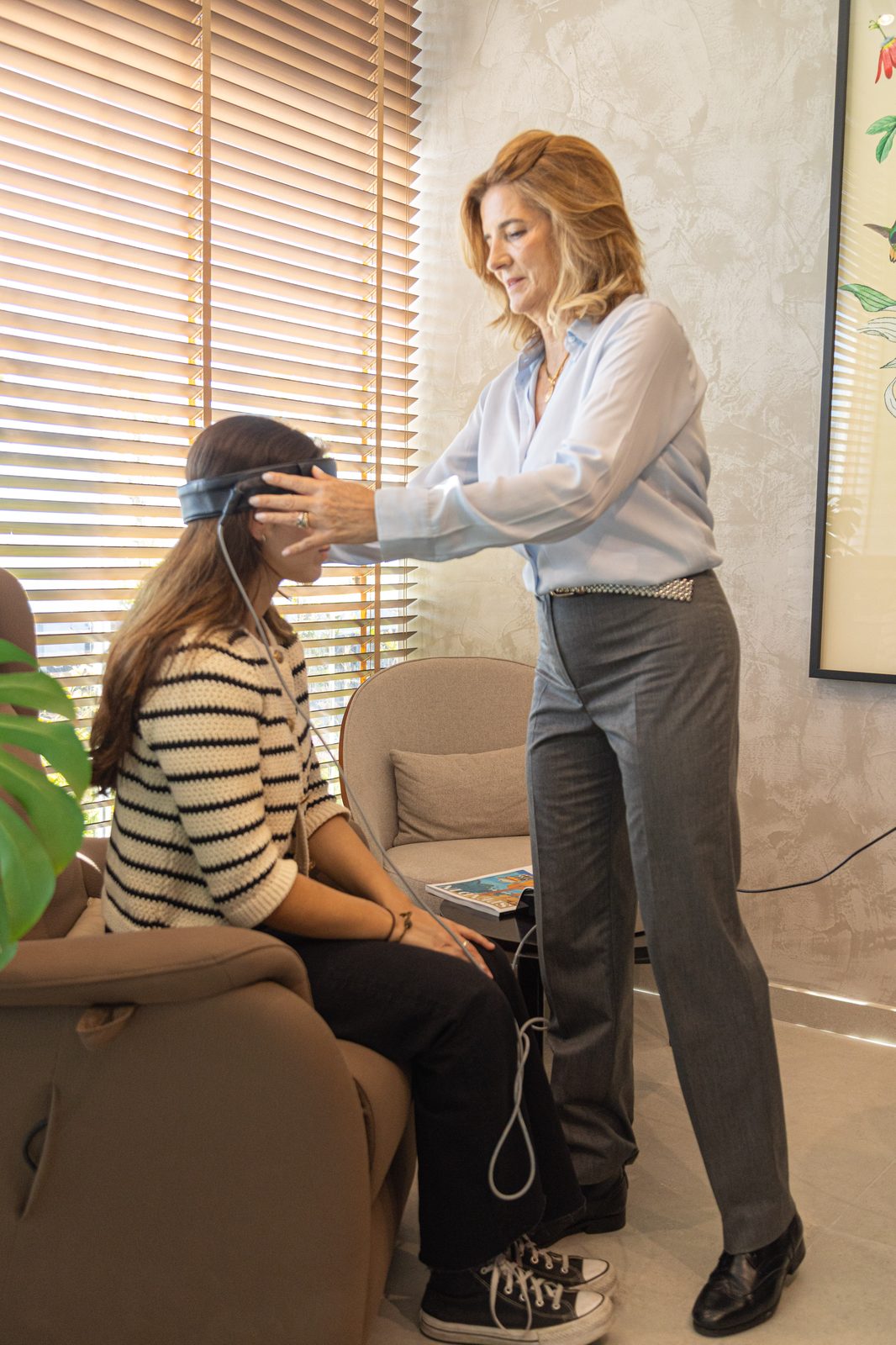
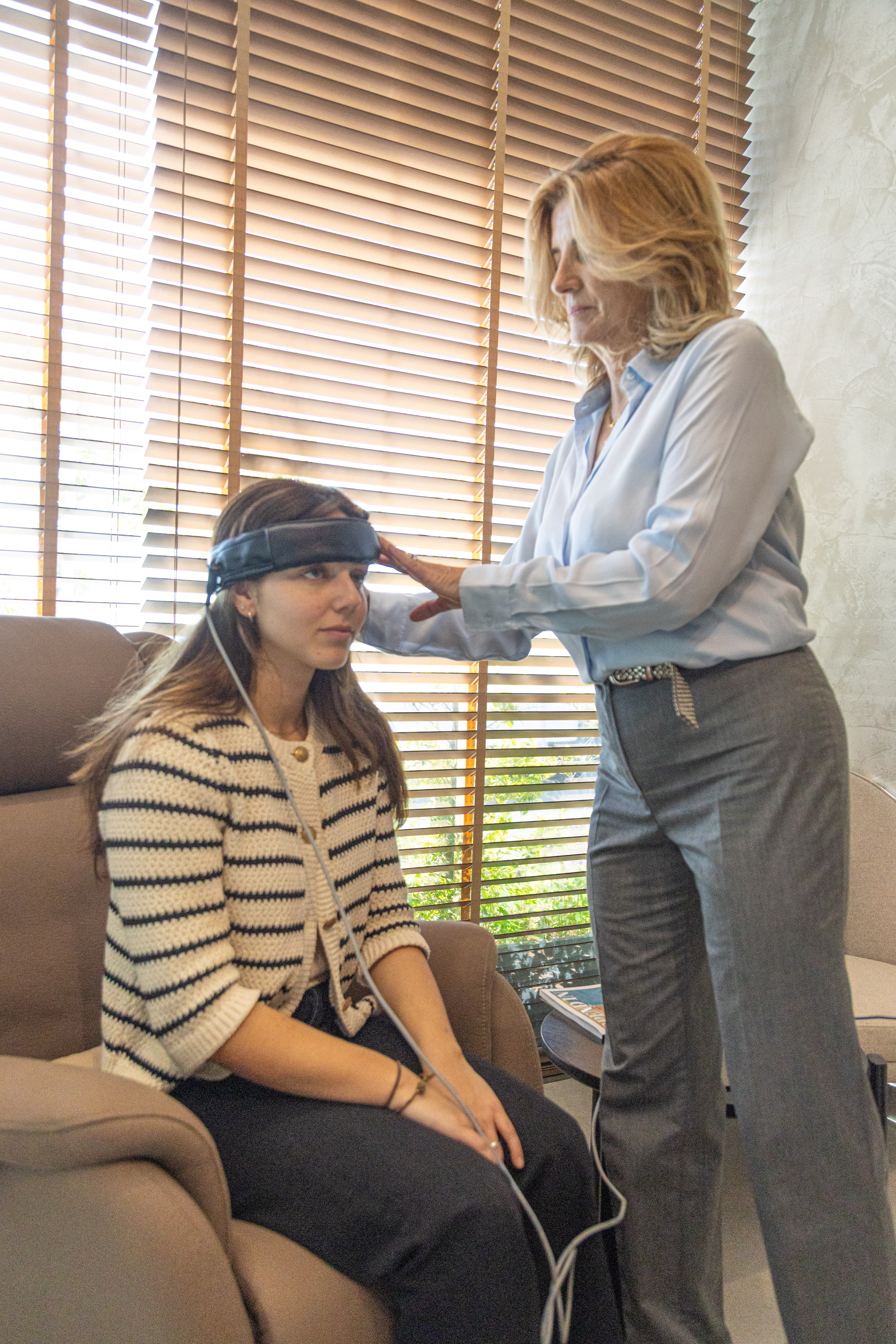
Methodological note: The AAPB (Association for Applied Psychophysiology and Biofeedback) and ISNR (International Society for Neuroregulation and Research) jointly publish and regularly update evidence ratings for biofeedback interventions, which are the internationally recognized standard. Mandelay Q9 and SCIO use the biofeedback modalities referenced in the literature (EMG, EEG, HRV, GSR). Evidence refers to the intervention category and does not replace medical advice.
Findings from systematic reviews and meta-analyses published in indexed peer-reviewed journals.
Nach Indikation filtern:
Headache & Migraine
Strong Evidence
Biofeedback significantly reduced headache frequency and severity vs. waitlist control. No significant difference vs. pharmacotherapy or CBT, establishing clinical equivalence. Synergistic benefit when combined with medication.
Mishra et al. ScienceDirect, 2025 (SR/MA, 558 participants). Nestoriuc et al. Appl Psychophysiol Biofeedback, 2008.
Chronic & Musculoskeletal Pain
Strong Evidence
Consistent efficacy as complementary support across diverse chronic pain conditions, with significant reductions in pain intensity and quality of life improvements. EMG biofeedback particularly effective for musculoskeletal pain; HRV biofeedback for central sensitization syndromes.
Constans et al. ScienceDirect/PMC, 2025 (PRISMA SR, 2014-2024). Lazaridou et al. 2023 (RCT, chronic low back pain).
HRV & Cardiovascular Health
Strong Evidence
Significant positive effects on: hypertension and cardiovascular prognosis, inflammatory state, asthma management, depression and anxiety, sleep disturbances, and cognitive performance. No adverse effects reported.
Lalanza et al. Appl Psychophysiol Biofeedback, 2023 (PRISMA SR, 143 studies). SR Diabetes & Metabolic Syndrome, 2024 (29 articles).
Anxiety Disorders
Moderate-Strong
Statistically superior to waitlist control. Multi-modal biofeedback (combined HRV + GSR + EEG) was most effective, suggesting broader physiological coverage increases therapeutic efficacy. Anxiety was the most commonly treated condition (68.3% of studies). A 4-week RCT (n=52) showed significant improvements in anxiety, depression, and insomnia (p<0.05).
Tolin et al. Adv Exp Med Biol 2020 (SR). Wang et al. Appl Psychophysiol Biofeedback 49(1):71—83, 2024 (RCT, n=52). Guidi et al. PubMed PMID: 33792548.
Depression
Moderate-Strong
Large effect sizes in MDD studies: Hedges' g = 1.050 (between-group). HRV biofeedback: meta-analyses report g=0.38—0.48; 34% superior to treatment as usual; remote HRVB effective (18 studies, N=1,352). Neurofeedback outperformed rTMS and tDCS in enhancing cognitive function. Dose-response relationship confirmed.
Pizzoli et al. Scientific Reports 2021 (14 RCTs, g=0.38). Donnelly et al. Acta Biomedica 2023 (9 RCTs, g=0.478). Springer Appl Psychophysiol Biofeedback 2025 (18 studies, remote HRVB). Fernandez-Alvarez et al. Psychological Medicine 2022.
PTSD & Trauma
Moderate Evidence
Neurofeedback vs. passive controls: moderate-to-large effect (SMD = 0.64; p = 0.002). Neurophysiological changes (alpha rhythm normalization) correlated with clinical improvement. Meaningful adjunct given 39-72% non-response to standard psychotherapy in military populations.
Voigt et al. Frontiers in Psychiatry, 2024 (SR/MA, 17 RCTs, 628 patients). Askovic et al. Eur J Psychotraumatology, 2023.
Urinary & Fecal Incontinence
Strong Evidence
Clear, consistent evidence of benefit as adjunctive therapy for urinary incontinence following prostatectomy and fecal incontinence. Medicare-reimbursable in the U.S. (NCD 30.1).
Kondo et al. VA Evidence Synthesis Program, 2019 (Evidence Map, 16 systematic reviews). PMC6854143.
Sports Performance
Moderate Evidence
Neurofeedback improves reaction time, cognitive performance, and emotional regulation across diverse sports (archery, soccer, volleyball, judo). Biofeedback aligns with stress resilience; neurofeedback with cognitive-motor optimization. Optimal protocol: 4-10 weeks, 2-3 sessions/week.
Tosti et al. Brain Sciences, 2024 (PRISMA SR, 24 studies). Frontiers in Psychology, 2025 (Bayesian MA).
Cancer Survivorship
Moderate Evidence
HRV biofeedback in breast cancer survivors: significant increase in low-frequency HRV (p = 0.027), long-lasting sleep quality improvement, and psychological well-being maintained at 6-month follow-up.
Three-arm longitudinal RCT, 60 post-treatment breast cancer patients, UK, 2025.
Post-Stroke Rehabilitation
Moderate Evidence
Cognitive (MoCA), motor (Fugl-Meyer), psychological (perceived stress), and autonomic function all improved at 3 and 6 months. Benefits became more pronounced over time.
89% of included studies reported positive outcomes for occupational stress reduction. Breathing-based biofeedback targeting HRV was particularly effective. Mobile app-directed and short-session interventions showed particular promise for resilience building.
PubMed, 2025. PMID: 40939175 (PRISMA, 2012-2024).
Schizophrenia (+ medication)
Moderate Evidence
EEG neurofeedback combined with standard pharmacotherapy significantly improved both positive and negative symptoms of schizophrenia compared to medication alone.
Duan et al. Frontiers in Psychiatry, 2025 (SR/MA, 14 studies, 1,371 participants).
Weight Management and Binge-Eating Disorder
Moderate Evidence
EEG-based neurofeedback shows efficacy as an adjunct for binge-eating disorder in systematic reviews and meta-analyses of RCTs. Pilot RCTs of EEG neurofeedback in adults with binge eating and overweight reduced objective binge episodes and eating-disorder psychopathology; some participants maintained abstinence at follow-up. Digital interventions including biofeedback in obesity management show modest effects (e.g. waist circumference). Position as complement to multidisciplinary approaches, not as replacement.
SR/MA neurofeedback for binge eating, ScienceDirect. Neurotherapeutics 2021 (pilot RCT, N=39; PMC9130382). Nutrients 2025, SR/MA of e-health/m-health interventions in obesity (PubMed 40647304).
Support During Smoking Cessation
Preliminary Evidence
Short PRISMA systematic reviews and studies of biofeedback and neurofeedback in smokers suggest that training may modulate craving and smoking-related brain plasticity. The Cochrane review on feedback about the effects of smoking on the body found no clear evidence that such feedback increases cessation rates. The literature supports the use of biofeedback as complementary support during the cessation process, not as a guarantee of quitting.
The effect of biofeedback on smoking cessation—a systematic short review, PMC8825623 (2021). Advances in biofeedback and neurofeedback studies on smoking, ScienceDirect 2020. Frontiers in Behavioral Neuroscience 2023 (biofeedback+neurofeedback and cessation status). Cochrane CD004705.
Chronisches Erschöpfungssyndrom
Moderate Evidence
HRV biofeedback in a pilot (n=28) showed medium-large effect on fatigue and superior cognitive outcomes vs. graded exercise. Position as complement to multidisciplinary approaches.
Allergy and Allergic Reactivity (complementary support)
Preliminary Evidence
A randomized trial of biofeedback-assisted relaxation in mild asthma patients (N=16) showed reduced asthma severity, lower bronchodilator use, improved pulmonary function, and immune markers (reduced neutrophils and basophils). Evidence for allergic desensitization per se (e.g. IgE-mediated) comes from immunotherapy, not biofeedback. Biofeedback may be considered as complementary support in the management of allergic reactivity and stress-mediated components, not as a replacement for established treatment.
Asthma Severity, Psychophysiological Indicators of Arousal, and Immune Function in Asthma Patients Undergoing Biofeedback-Assisted Relaxation, Appl Psychophysiol Biofeedback 2000 (Springer).
Evidence Matrix
Consolidated evidence levels across all conditions reviewed.
Condition
Evidence Level
Key Finding
Headache / Migraine
Strong
Equivalent to pharmacotherapy; synergistic when combined
Chronic Pain (multi-condition)
Strong
Pain + QoL improvements across diverse conditions
HRV / Cardiovascular
Strong
Multi-system benefits; established protocol guidelines
Post-Prostatectomy Incontinence
Strong
Consistent benefit; Medicare-reimbursable (USA)
Anxiety Disorders
Moderate-Strong
Superior to waitlist; multi-modal most effective
Depression (MDD)
Moderate-Strong
Hedges' g = 0.60-1.05; NF > rTMS for cognition
PTSD / Trauma
Moderate
SMD = 0.64 vs. passive control; 17 RCTs, 628 patients
Sports Performance
Moderate
Reaction time, cognition, emotional regulation across sports
Mandelay Q9 and SCIO carry the CE Mark and meet international standards. Certification documentation can be requested via our contact details or viewed on the manufacturer's website.
CE Mark
Conformity with European health, safety and environmental standards.
Quality Standards
Mandelay Q9: ISO 13485:2016. Equipment verifiable with the manufacturer.
We recommend confirming with your therapist that the equipment used has valid certification and manufacturer documentation.